12-Stage Project Journey
Every stage of the Ring Fiber project — from initial site survey to final completed installation.
Site Survey — Temple, Texas Fiber Route Assessment
Before any equipment was mobilized MG Infrastructure met with Comcast and Harris County Water Way District to do a site survey. In conjunction with both Comcast and Harris County Water Way District it was determined that the existing plant needed to be rebuilt and new 96 Count Fiber installed to meet the needs of the Harris County Water Way District.
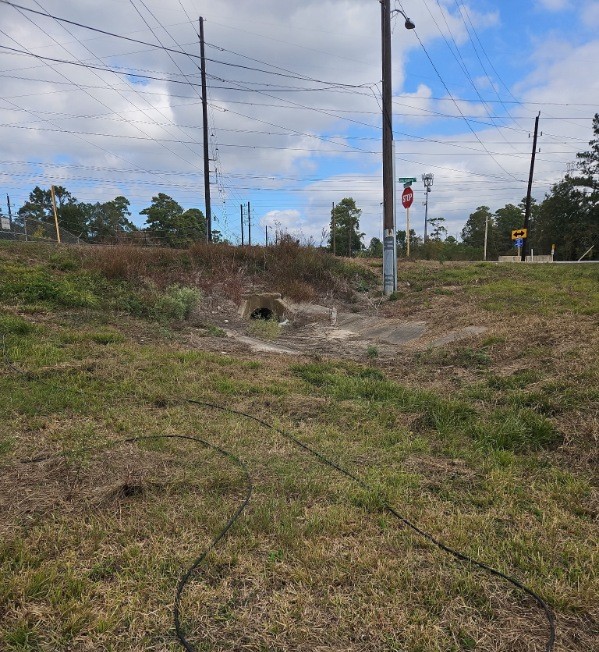
Route Planning — Fiber Path & Bore Path Mapping
With the site survey complete, the bore path and trench route were mapped and finalized. We reviewed the full route for utility crossings, right-of-way conflicts, and optimal entry/exit pit locations for the directional drilling equipment.
Route planning is the step that sets up successful production. Getting this right reduces rework, protects existing infrastructure, and keeps the crew moving efficiently once work begins.
Stage 02 — Route Planning Photo
Utility Marking — 811 Locate & Utility Exposure
All 811 locate tickets were pulled and verified before any ground was disturbed. Where the bore path crossed existing utilities, we potholed and daylit each crossing to visually confirm depth and location before the drill string passed through.
This step is non-negotiable. Exposing known utilities before we drill protects our crews, protects the client's assets, and ensures we're in full compliance with all local and state requirements.
Stage 03 — Utility Marking / Potholing Photo
Trenching — Open Trench Installation for Fiber Lateral Runs
Where directional boring was not required, open trenching was used to install the fiber conduit along the route. Trench depth and width were maintained per project specifications, with spoil management handled on-site to keep the work area clean and safe.
Stage 04 — Trenching Photo
Conduit Installation — Innerduct & Conduit Runs
Conduit and innerduct were installed in the trench and bore path according to project specs. Pull boxes and hand holes were placed at required intervals to allow future access and cable management.
Stage 05 — Conduit Installation Photo
Fiber Pulling — Mainline Fiber Cable Pull
Mainline fiber optic cable was pulled through the installed conduit system. Each pull was tracked for footage production, tension, and documentation. Our crew maintained communication between the entry and exit points throughout the cable pull.
Stage 06 — Fiber Pulling Photo
Fiber Drop — Last-Mile Fiber Drop to Customer Location
Fiber lateral runs (drops) were placed from the mainline conduit to each individual home and business on the route. Each drop was properly routed, protected, and documented with GPS coordinates and photos.
Stage 07 — Fiber Drop Photo
Building Entry — Fiber Entry Point Installation
Each fiber drop was brought into the building or structure at a proper entry point — maintaining weatherproofing, code compliance, and clean presentation. Entry points were sealed and photographed after completion.
Stage 08 — Building Entry Photo
Splicing — Fiber Optic Splice & Termination
Fiber optic cables were spliced at designated splice points along the route. Splice vaults were prepared, fibers were cleaned and terminated, and all splice work was documented by location and fiber count for as-built records.
Stage 09 — Fiber Splicing Photo
Equipment Installation — Hardware & Network Equipment
Pull boxes, hand holes, and any required network hardware were installed and secured per the project scope. All equipment placement was documented and verified against the project design before testing began.
Stage 10 — Equipment Installation Photo
Testing — OTDR Fiber Testing & Signal Verification
OTDR (Optical Time-Domain Reflectometer) testing was performed on each fiber strand from end to end to confirm signal quality, loss levels, and splice performance before the network was handed off to the client.
Stage 11 — Fiber Testing Photo
Final Completed Installation — Project Closeout
Site cleanup, final walkthrough, as-built documentation, and completion photos were delivered to the client. The project was closed out cleanly — on schedule, within scope, and with full documentation of every stage from survey to final install.
Stage 12 — Final Completed Installation Photo